
Blog
Derma Roller for Hair Growth: Complete Guide

What Is a Derma Roller and How Does It Help Hair Growth?
A derma roller is a handheld device fitted with hundreds of fine needles arranged on a rotating cylinder. When rolled across the scalp, these needles create thousands of microscopic punctures in the skin. This controlled micro-injury triggers the body’s natural wound-healing response, which involves increased blood flow, collagen production, and the release of growth factors — all of which benefit hair follicles.
The scientific term for this process is microneedling, also referred to as collagen induction therapy. Research published in dermatology journals has consistently shown that scalp microneedling can improve hair density when used alongside topical treatments. The micro-channels created by the needles also dramatically increase the absorption of serums and oils applied to the scalp, making your existing hair care products work significantly harder.
How Scalp Microneedling Stimulates Hair Follicles
Hair loss often occurs when follicles miniaturize — they gradually shrink and produce thinner, weaker hairs until they stop producing visible hair altogether. Microneedling addresses this process through several biological mechanisms.
First, the micro-injuries stimulate the release of platelet-derived growth factor (PDGF) and vascular endothelial growth factor (VEGF). These proteins promote the formation of new blood vessels around hair follicles, improving their nutrient supply. Second, the wound-healing cascade activates stem cells in the hair bulge region, which can restart dormant follicles. Third, increased collagen production strengthens the dermal layer that anchors the hair root, creating a firmer foundation for healthier hair growth.
The result is a triple-action effect: better blood supply, reactivated follicles, and stronger structural support for each hair strand.
Choosing the Right Needle Size
Needle length determines how deep the microneedling penetrates and, consequently, what effects it produces. For scalp use and hair growth, the most common and recommended sizes fall between 0.50mm and 0.75mm.
0.25mm to 0.50mm
This range is ideal for beginners and for enhancing topical product absorption. The needles penetrate the outermost layer of skin (epidermis) and create channels that allow serums to bypass the skin barrier. The The Mossi London Derma Roller (540 Needles, 0.50mm) sits at the upper end of this range, offering a good balance between absorption enhancement and mild collagen stimulation.
0.50mm to 0.75mm
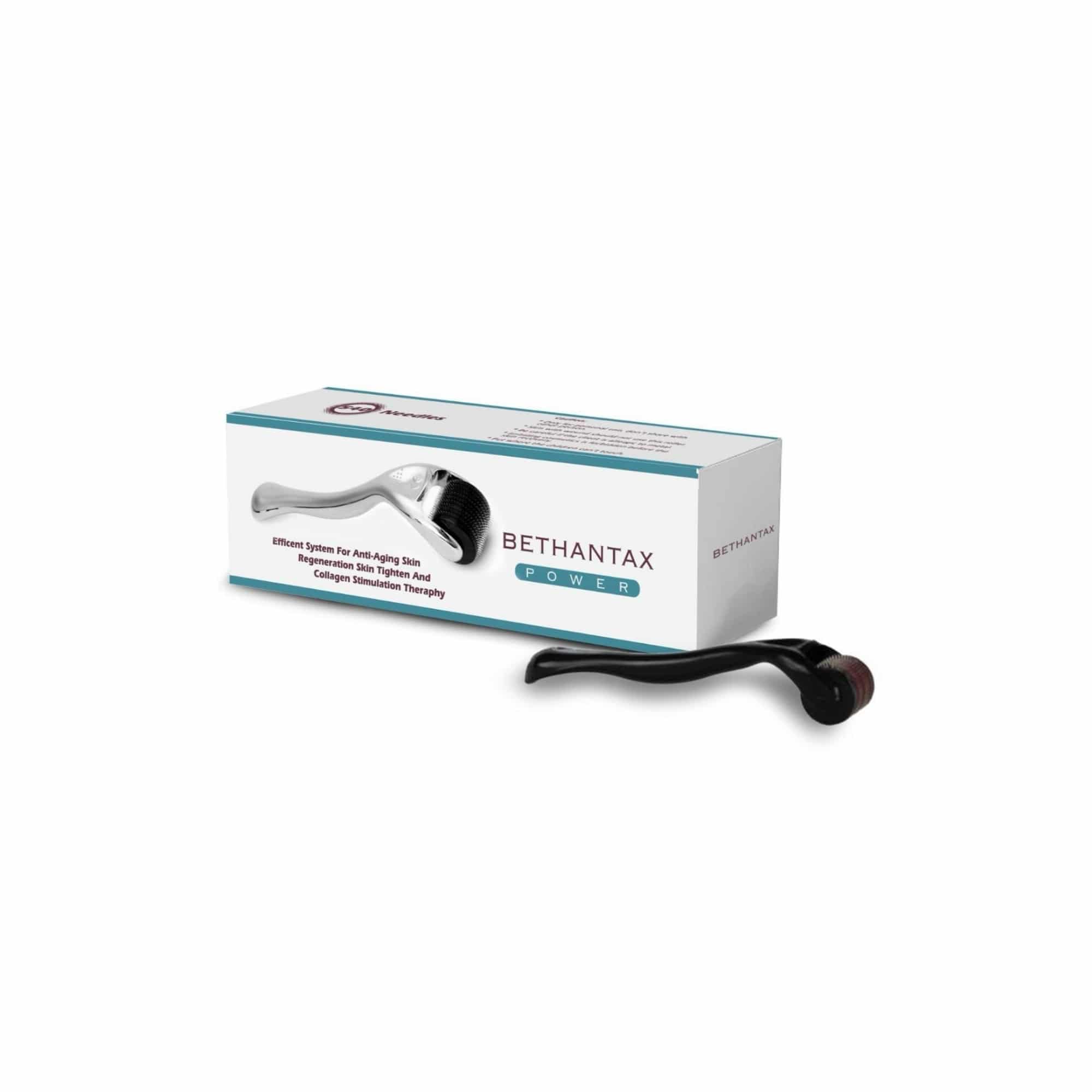
This is the most commonly recommended range for hair growth specifically. Needles reach the upper dermis, triggering a stronger wound-healing response and more significant growth factor release. The Must De Qen Scalp Derma Roller (0.55mm, Titanium) and the Bethantax Power Derma Roller (0.55mm, Titanium) both use 0.55mm titanium needles, which hit a sweet spot for hair growth stimulation without excessive discomfort.
Above 0.75mm
Longer needles (1.0mm and above) reach deeper into the dermis and produce a stronger collagen response. However, they also carry more risk of irritation and should generally be used under professional guidance. For at-home scalp microneedling, staying at or below 0.75mm is the safest approach.
How to Use a Derma Roller on Your Scalp
Proper technique ensures you get the most benefit while minimizing irritation. Follow these steps for each microneedling session.
Step 1: Prepare Your Scalp
Start with a clean scalp. Wash your hair with a gentle shampoo and allow it to dry completely. The scalp must be free of oils, styling products, and dirt to prevent pushing contaminants into the micro-channels. Disinfect your derma roller with 70% isopropyl alcohol and allow it to air dry before use.
Step 2: Section Your Scalp
Part your hair into sections to expose the scalp in the areas you want to treat. Work on one section at a time. If you have longer hair, use clips to hold sections out of the way. Focus on areas where thinning is most noticeable.
Step 3: Roll with Light, Even Pressure
Place the derma roller against the scalp and roll firmly but gently. Roll 4 to 5 times in each direction: horizontally, vertically, and diagonally. This creates an even pattern of micro-channels across the treatment area. Do not press so hard that it causes significant pain — mild tingling or a slight prickling sensation is normal.
Step 4: Apply Your Serum
Immediately after rolling, apply your chosen hair growth serum directly onto the treated area. The micro-channels are open for approximately 10 to 15 minutes after needling, so applying serum during this window maximizes absorption. Mesotherapy serum sets like the Must De Qen Mesotherapy Hair Serum Set are specifically formulated for post-microneedling application.
Step 5: Clean and Store Your Roller
After each session, rinse the derma roller under running water to remove any debris. Soak it in 70% isopropyl alcohol for 5 to 10 minutes. Shake off excess liquid, allow it to air dry, and store it in its protective case. Never share your derma roller with anyone else.
How Often Should You Microneedle Your Scalp?
The optimal frequency depends on your needle length. For 0.25mm to 0.50mm rollers, you can microneedle 2 to 3 times per week since the shallow depth allows the skin to recover quickly. For 0.50mm to 0.75mm rollers, once per week is sufficient — the deeper penetration requires more healing time between sessions. Allow at least 5 to 7 days between sessions with longer needles.
Consistency matters more than frequency. A regular weekly session over several months will produce better results than aggressive daily use that irritates the scalp and forces you to take breaks.
Pairing Your Derma Roller with Serums
A derma roller is most effective when combined with a quality hair growth serum. The micro-channels created by the needles can increase topical absorption by up to 300%, meaning the active ingredients in your serum reach the follicles in much higher concentrations than surface application alone.
Look for serums containing peptides, biotin, caffeine, or growth factors. Avoid applying products with alcohol, fragrance, retinoids, or strong acids immediately after microneedling, as these can cause burning or excessive irritation on the freshly treated scalp. Browse the full range of serums and oils available at Oriento to find the right match for your roller.
When to Replace Your Derma Roller
Derma roller needles dull with use. A roller with bent or blunt needles tears the skin rather than puncturing it cleanly, which increases irritation without improving results. Replace your derma roller every 3 to 4 months with regular weekly use, or sooner if you notice increased discomfort during sessions. Titanium needle rollers generally last longer than stainless steel ones before dulling.
Browse all available derma rollers and microneedling tools and accessories at Oriento to find the right device for your hair growth routine.
Does derma rolling hurt on the scalp?
Most people describe the sensation as a mild tingling or prickling feeling, especially with 0.50mm to 0.55mm needles. It should not be painful. If you experience significant pain, you may be pressing too hard. Starting with a shorter needle length like 0.25mm can help you get comfortable with the sensation before moving to longer needles.
Can I use a derma roller after a hair transplant?
You should wait at least 4 to 6 weeks after a hair transplant before using a derma roller on the transplanted area, and only after your surgeon confirms the grafts are fully healed. Microneedling too early can dislodge newly implanted follicles. The donor area typically heals faster and may be safe for rolling sooner, but always follow your surgeon’s specific guidance.
How long until I see results from scalp microneedling?
Most people begin noticing reduced shedding within 4 to 6 weeks of consistent weekly sessions. Visible improvements in hair density and thickness typically appear after 3 to 6 months. As with any hair growth treatment, patience and consistency are essential since hair grows slowly and follicle reactivation takes time.
